The connector question sounds like a standards war. For a driver it is simpler: what shape is the inlet on the car, and what shape is on the station? The answer decides whether the cable connects, before any question of speed, price or network. Pick both ends below and watch the answer change.
- CCS1 stations
- 930
- NACS stations
- 517
- CCS1 models
- 96
- NACS models
- 6
Plug lab · pick one from each row
Will it plug in?
1 · Your car's inlet
2 · The plug on the post
A CCS1 car counts as a J1772 car at a Level 2 post, and a CHAdeMO car has a second, J1772 inlet. Those two are the reason the grid is not a simple diagonal.
CCS1 · DC → NACS · AC / DC
The shape is bridgeable. The access is not.
A NACS-to-CCS1 adapter carries DC where the site admits non-Tesla cars and the car's software supports it. Not every Supercharger is open, and the directory records the plug, not the policy.
You needNACS-to-CCS1 adapter
- Models with this inlet
- 96
- Stations with this plug
- 517
An adapter bridges the shape of the plug. It cannot create access to a closed network, and it cannot raise the car's limit — the session runs at the lowest of the post, the adapter and the car.
What is actually different?
CCS1 keeps the round J1772 shape for the AC pins and adds two larger DC pins underneath. That is why a CCS1 car can use a J1772 AC station without an adapter: the top part of the inlet is the same. A CCS1 station is therefore usually a DC fast charger, while a J1772 station is AC only — the split the Level 2 and DC fast guide covers from the charger side.
NACS uses the same compact pins for AC and DC. It is smaller than CCS1, which matters on a crowded charge port, and it is the connector Tesla built its network around. The plug does not set the speed: a NACS destination charger and a NACS Supercharger use the same shape at very different powers.
The version to remember
CCS1 is a J1772 plug with two DC pins bolted underneath. NACS is one small plug that does both jobs. The extra pins are the whole difference, and the reason a CCS1 car can still use a Level 2 post.
What each plug looks like
Four connectors appear on US stations. Two of them are DC-only, one is AC-only and one does both — and the drawing next to each photo is the face you are looking at when the cable is in your hand.
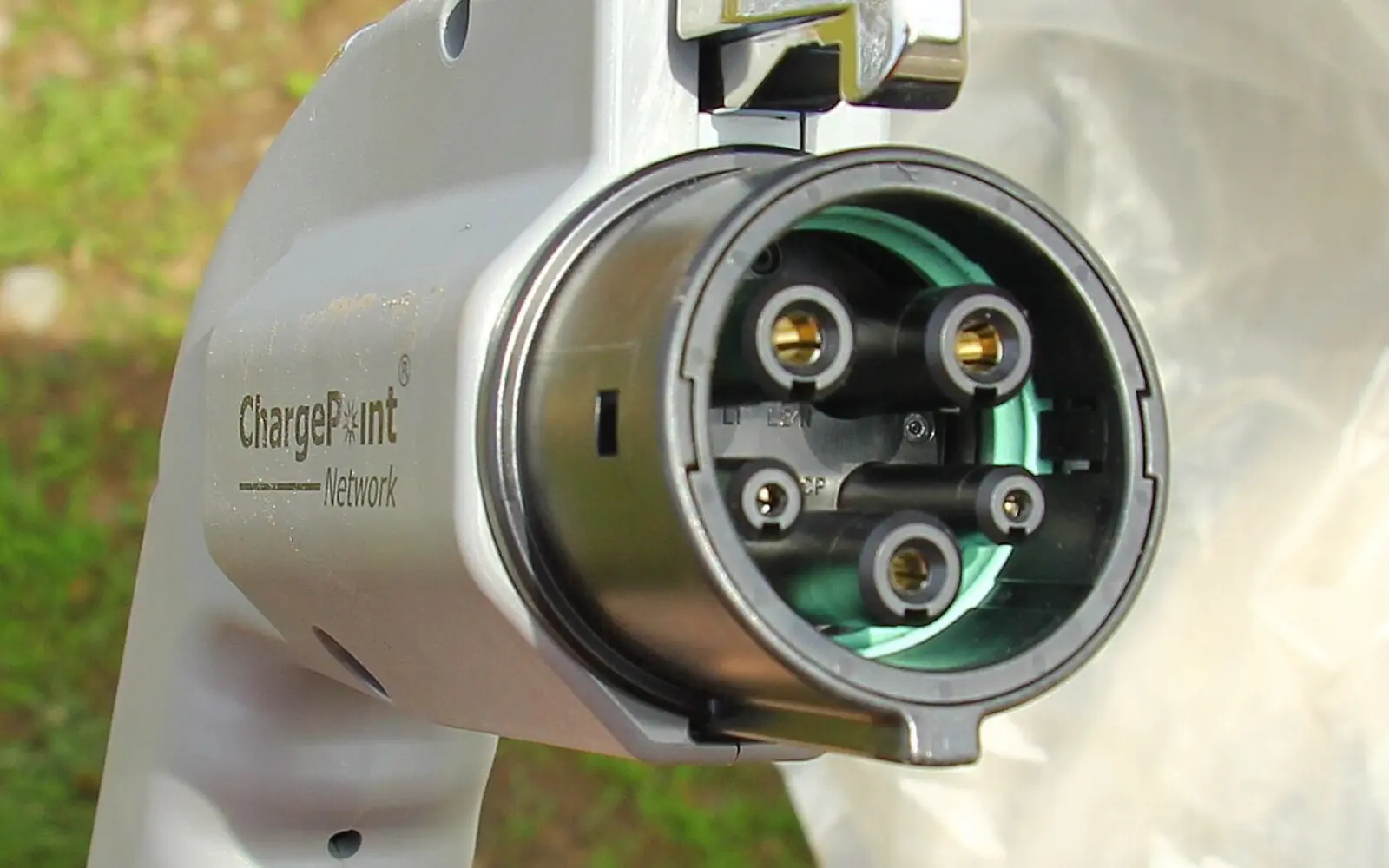
J1772 · SAE J1772
AC · 5,294 stations
A round face with five small pins and nothing below it. AC only — no DC pins.
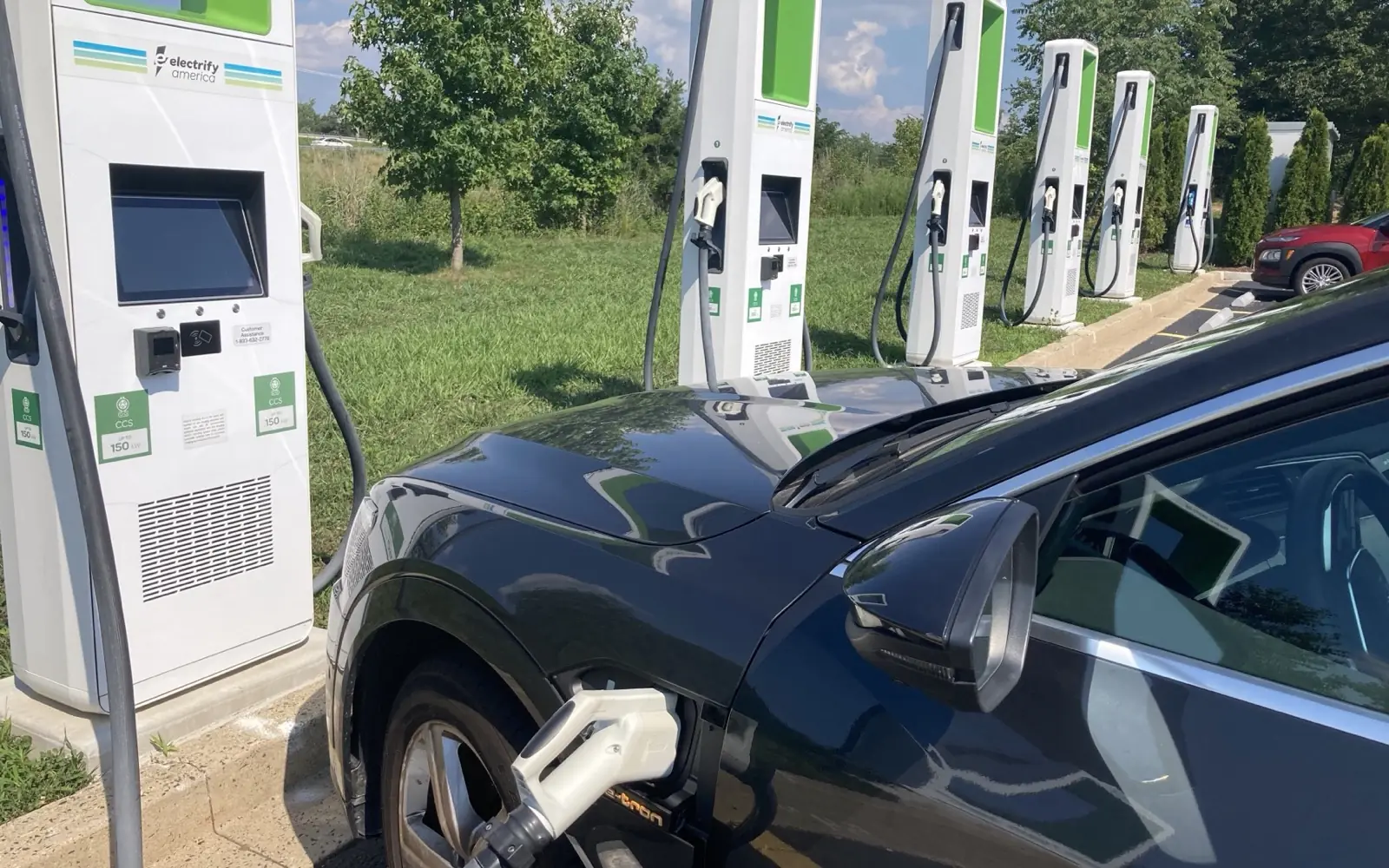
CCS1 · SAE J1772 CCS Combo 1
DC · 930 stations
The J1772 circle with two large DC pins underneath it. The combo shape is the giveaway.
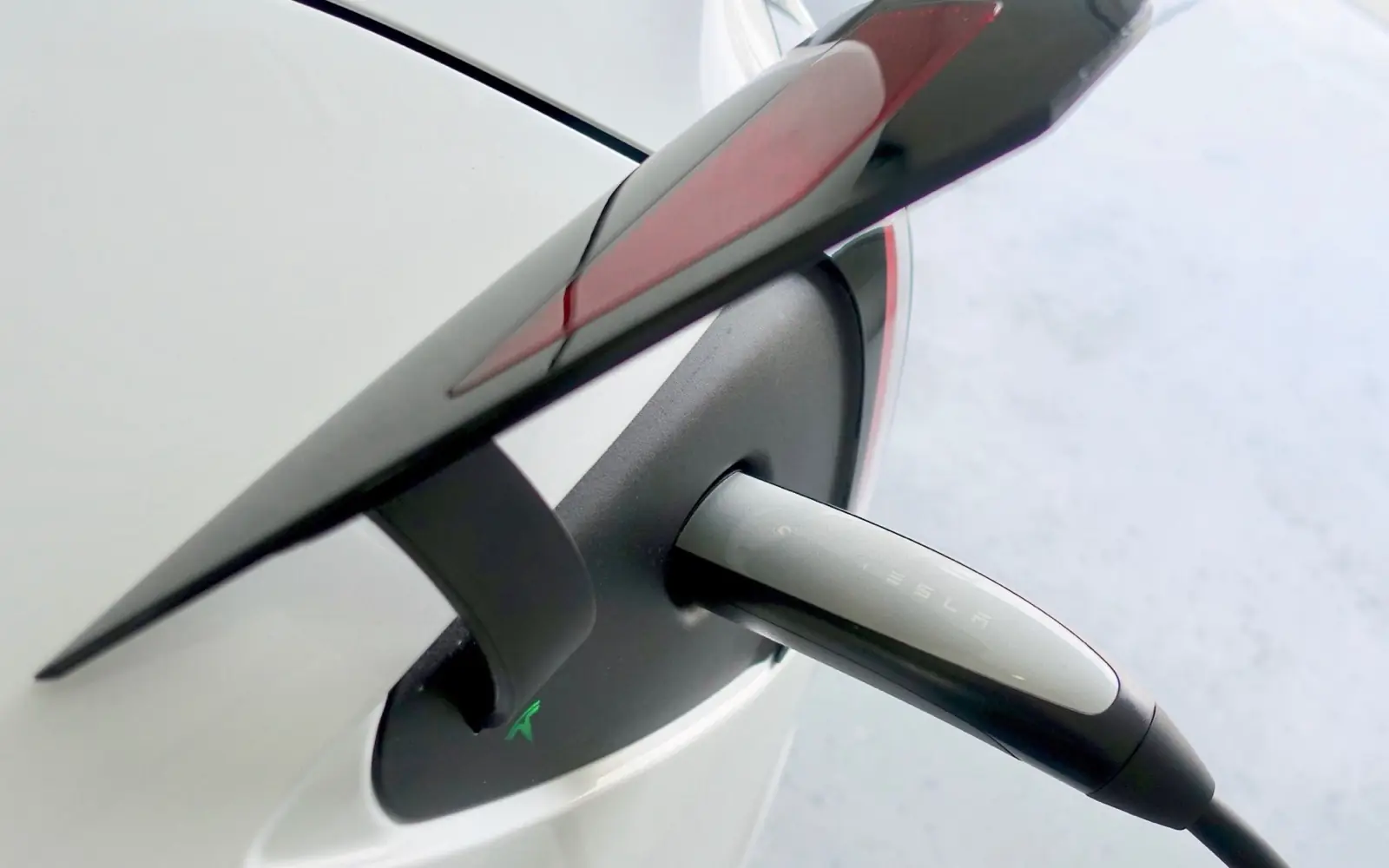
NACS · SAE J3400
AC / DC · 517 stations
Small and narrow. Three small pins above two large ones, and the same pins carry AC and DC.
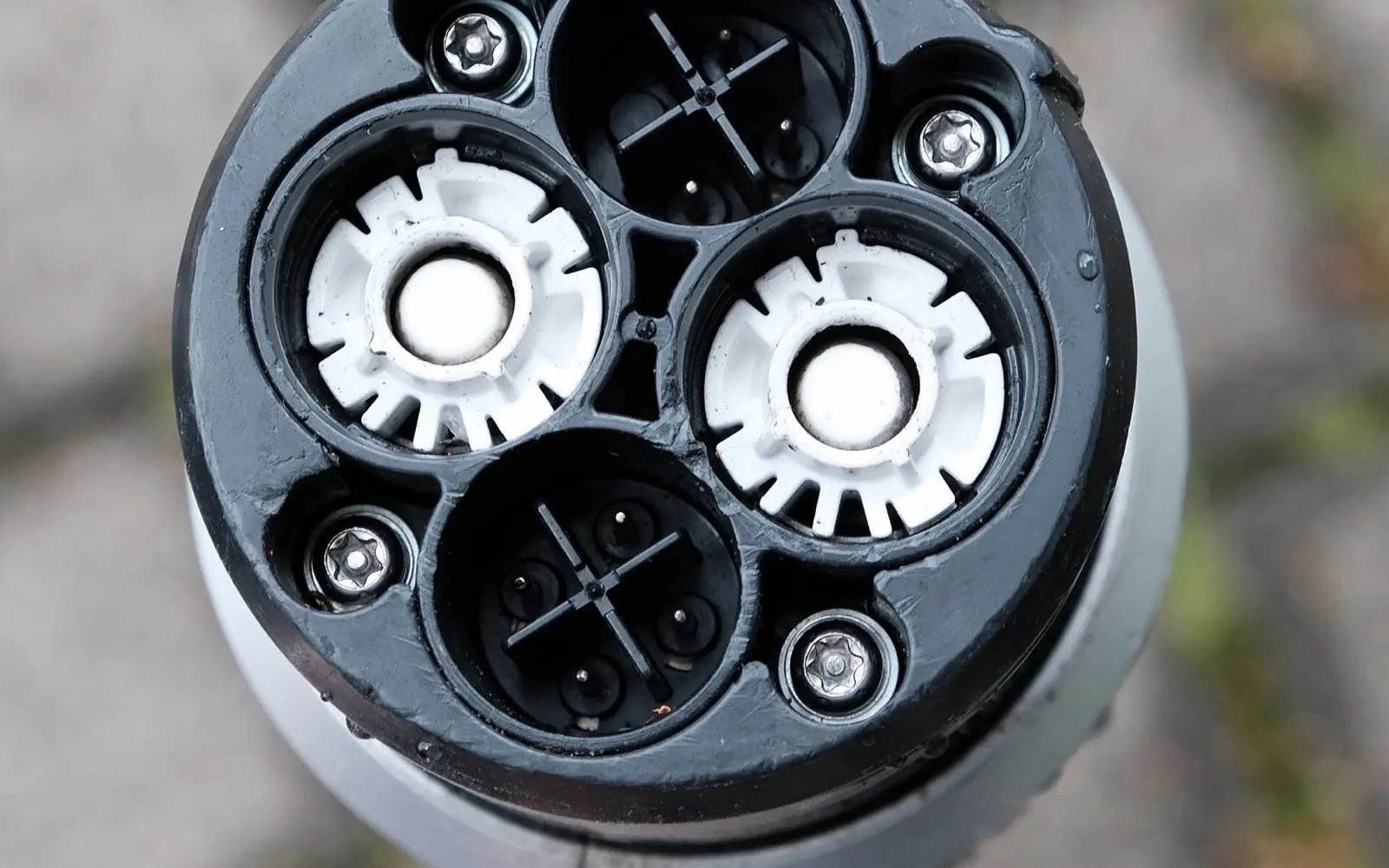
CHAdeMO · CHAdeMO
DC · 364 stations
The big round one: two large power pins at the top and a pin block underneath.
Photos: J1772 — Michael Hicks (mulad), CC BY 2.0 · CCS1 — Ken Fields, CC BY-SA 2.0 · NACS — Steve Jurvetson, CC BY 2.0 · CHAdeMO — Danilo Bargen, CC BY-SA 4.0. Counts are from the EVDIR build-time data.
Can you spot the plug?
Five plugs, drawn face on, no labels. Two of them share the same round top — the extra pins underneath are the only difference, and that is exactly the thing worth recognising at a station.
Game · five plugs · shapes only
Which plug is this?
1 / 5 · 0 right
Pick the connector. The drawing is a face-on schematic — the pins are the clue.
Which cars use CCS1 and which use NACS?
Most non-Tesla EVs built since about 2018 have a CCS1 inlet for DC and a J1772 inlet for AC — often described as one CCS1 port because the AC pins are part of it. Teslas use NACS for both. Newer US models from several brands are moving to NACS, which is why the model year matters as much as the badge.
The vehicle guide lists 6 NACS models and 96 CCS1 models because the catalogue's non-Tesla entries are mostly CCS1. That is a record of the trims in the data, not a claim that a 2026 car of the same name has the same inlet. Check the actual car's port.
The two plugs in one table
| Connector | Current | Standard | Stations | Models in guide | Typical cars |
|---|---|---|---|---|---|
| J1772 | AC | SAE J1772 | 5,294 | 102 | AC only; most non-Tesla cars |
| CCS1 | DC | SAE J1772 CCS Combo 1 | 930 | 96 | Most non-Tesla EVs since 2018 |
| NACS | AC / DC | SAE J3400 | 517 | 6 | Tesla and newer NACS-native models |
| CHAdeMO | DC | CHAdeMO | 364 | 3 | Older Leaf and Japanese EVs |
A station can list more than one connector and a car can have more than one inlet, so the columns overlap. Counts are from the EVDIR build-time data.
What an adapter can and cannot do
- It can bridge the shape. A NACS-to-CCS1 adapter lets a CCS1 car take a NACS cable, and a CCS1-to-NACS adapter does the reverse, where the car and station support it.
- It cannot create access. Not every Tesla Supercharger is open to non-Tesla cars, and not every network authorizes every adapter. The station page in the directory records the connector, not the access policy.
- It cannot raise the limit. The session runs at the lowest of the car, the adapter and the station. A 350 kW site does not turn a 150 kW car into a 350 kW car.
- It does not fix the wrong direction. No adapter lets a DC post charge an AC-only car, and a J1772 inlet has no sockets for the CCS1 DC pins. The combos that do not exist stay that way.
One rule that survives every adapter
An adapter changes the plug, never the negotiation. If the car cannot accept the current or the network will not authorize the session, the shape was never the problem.
Does CCS1 still make sense?
Yes. CCS1 is on 96 models in the vehicle guide and at 930 stations in the directory, and adapters cover some of the NACS side. If you are buying used, the condition, battery and price matter more than the shape of the port; if you are buying new, check which inlet the exact model year ships with and whether the adapter you would need is supported.
How to tell them apart at the car
A CCS1 inlet has the familiar round top and two extra DC pins below. A NACS inlet is a single small oval with the same pins used for AC and DC. A J1772 inlet has the round top but no DC pins. A CHAdeMO inlet is the largest of the four, with two big power pins at the top. The connector guide has a photo and the station list for each.
The whole page in four lines
- 1The plug is a shape; the car and the post decide the speed.
- 2CCS1 is a J1772 port with two DC pins underneath — so it still takes a Level 2 cable.
- 3NACS is one small plug for AC and DC, and it is not the same as every Tesla-only charger.
- 4An adapter bridges the shape. It never buys access, and it never raises the limit.