
Tesla uses one connector for two very different jobs. The same NACS plug is on a slow Wall Connector in a hotel car park and on a Supercharger cabinet beside a highway. The name on the map is what tells them apart; the plug alone does not — and this directory proves it: 400 of its 517 NACS stations are under 50 kW.
- NACS stations
- 517
- Tesla Destination
- 166
- NACS under 50 kW
- 400
- Median Destination
- 11.5 kW
What is the difference between a Destination charger and a Supercharger?
One is a wall-mounted AC box that fills a battery while the car sits overnight. The other is a DC cabinet that fills it while the driver waits. They share a plug, a company and a name on the map, and nothing else that matters.
| Charger | Current | Typical power | Typical time | Where | Billing |
|---|---|---|---|---|---|
| Destination | AC | 11.5 kW median here; 6–20 kW typical | 3–10 hours | Hotels, restaurants, workplaces | Free, included or code-gated by the property; 84 of 166 sites here list a tariff |
| Supercharger | DC | 150–350 kW | 20–40 min (10–80%) | Highway corridors and city hubs | Per kWh or per session; idle fees may apply |
Power and time are typical ranges, not a promise for a particular site or car. The Destination figure is the median of the sites in this directory that report a power rating.
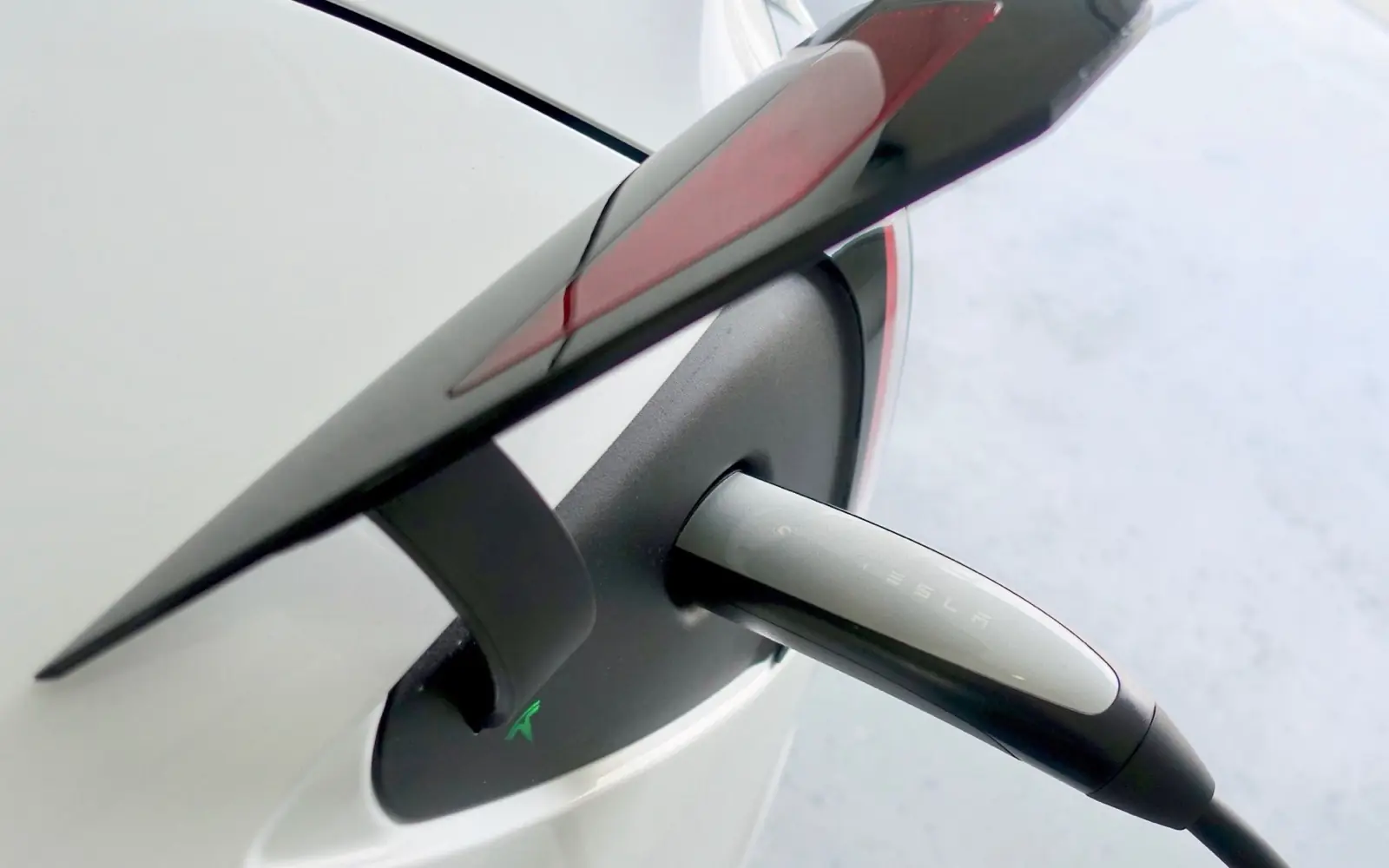
The plug is the same — the power is not
A NACS label on a station page says what shape the cable is, not how fast it delivers. Sorted by reported power, the 517 NACS stations here look like this:
Under 50 kW · AC · Destination sites and other Level 2 posts
400
50–149 kW · DC · Older or smaller fast posts
42
150 kW+ · DC · The fast end of the NACS set
75
Who is allowed to plug in?
The plug decides whether the cable fits. The network decides whether the session starts. Pick both below — the second answer is the one that surprises non-Tesla drivers.
Access check · same plug, different rules
Can your car charge here?
CCS1 car · Supercharger
1 · What you drive
2 · What is on the post
Access is set by the site, not by the connector. The directory records what a station lists, not whether a particular car or adapter will be authorized, so treat the Tesla app as the final word.
Two things have to line up.
The site has to be open to non-Tesla cars, and the car needs a NACS-to-CCS1 adapter — or the post needs a built-in Magic Dock. Where either is missing, the cable has nowhere to go.
You needNACS-to-CCS1 adapter
Access is recorded by neither the connector nor the directory: check the Tesla app for the site.
What each adapter actually bridges →An adapter answers the shape of the plug. It does not open a closed network, does not raise a car's power limit and does not turn AC into DC.
How to tell which one you are at
- The network label. A station page in the directory names the operator. Tesla Destination sites are labelled as such; a NACS label alone does not mean Supercharger.
- The power. A Destination charger is a Level 2 unit, usually under 20 kW. A Supercharger is DC fast, 150 kW or more at the cabinet.
- The location. Destination chargers sit where cars park for hours; Superchargers sit where a driver stops for minutes.
- The billing. A Supercharger session appears on a Tesla account or app. A Destination site is free, included with a stay, or code-gated by the property.
Does a Destination charger fill a Tesla overnight?
At the median site in this directory — 11.5 kW — a car adds about 40 miles an hour, and a nine-hour stay covers roughly 360 miles. That is more than most drivers use in a week, which is why the speed stops mattering once the car is parked for the night.
Median site
11.5 kW
AC, Level 2
Per hour
40 mi
at 3.5 mi/kWh
Nine hours
360
miles added
The comparison that matters is not Destination against Supercharger. It is what the car needs against what the stop costs you in time. The Level 2 vs DC fast guide puts the two levels on one clock, and the charging-time guide explains the taper that stops a fast charger from being a straight line.
What it costs
Destination charging is a property decision, not a rule: 84 of the 166 sites here list a per-kWh tariff, at a median of $0.39 per kWh, and the rest list no price at all — which usually means free or included in a room. Superchargers are billed per kWh or per session, with idle fees once the car is done; across every priced public station in this directory the median listed tariff is $0.35 per kWh.
The cost tables show how networks and states compare, and the cost-per-mile guide turns any tariff into a number you can compare with petrol.
Is any of that a myth?
Six claims, true or false. The corrections carry the counts, so a guess still leaves you with something.
Game · six claims · true or false
True or false?
1 / 6 · 0 right
Claim 1
Every NACS station is a Supercharger.
Decide before you tap. Most of these are believed by somebody who has only ever seen the plug.
Which one do you want?
- Parking overnight or for a meal: a Destination charger is the right shape, and often the cheapest.
- Crossing a state or a long route: a Supercharger, because the stop is minutes not hours.
- No home charging: a Destination site near home or work can cover a daily commute, but check access and idle rules.
- Towing or a cold day: expect a shorter range and a longer fast stop; plan the next charger before you need it.
The one-line version
The plug is Tesla's, the power is the post's, and the access is the network's. Read the station page, not the shape of the cable.
The whole page in four lines
- 1Destination is AC at a hotel; Supercharger is DC on a route.
- 2Same NACS plug at both, so the plug tells you nothing about speed.
- 3Most NACS stations in this directory are not fast: the Destination network is why.
- 4Non-Tesla access is a per-site policy, and a CCS1 car also needs an adapter.