
2026 · EV6 Long Range RWD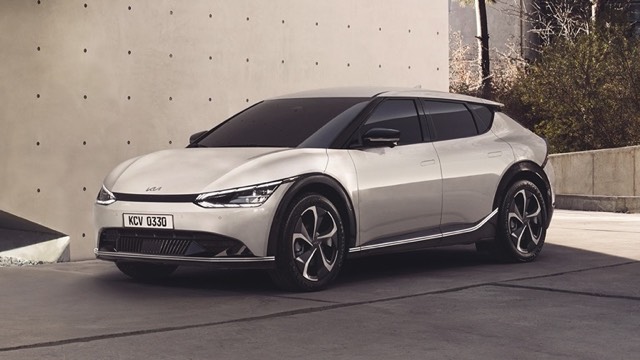
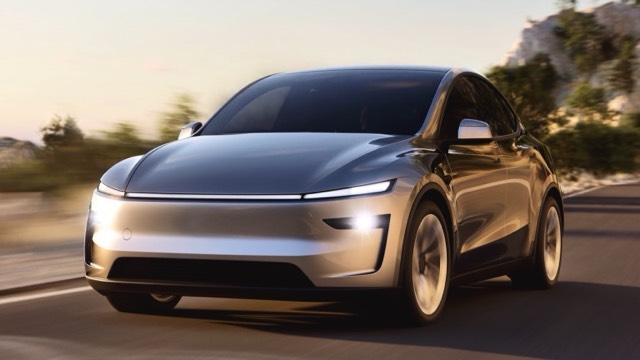
The Kia EV6 is rated 319 miles on the EPA test, the Tesla Model Y 357. A 10–80% stop takes 17 minutes in the Kia EV6 and 25 in the Tesla Model Y. Every figure below names the version of the car it belongs to, and the three tools further down turn the same numbers into a charging race, a road trip and a yearly bill.
At a glance
Kia EV6 · EV6 Long Range RWD
319mi EPA
17min 10–80%
$42,900from
Tesla Model Y · Model Y Long Range RWD
357mi EPA
25min 10–80%
$39,990from
The short answer
The Tesla Model Y is rated 357 miles against 319 — 38 miles, 12% further. It uses 29.6 kWh to cover 100 miles where the Tesla Model Y needs 25.2.
A 10–80% stop takes 17 minutes in the Kia EV6 and 25 in the Tesla Model Y. On a 50 kW post it is 62 and 66 minutes, so most of the advantage disappears at a slow site.
The Tesla Model Y makes 364 kW against 168.
Which one, in one line
Pick the Tesla Model Y ifit wins on range (357 mi against 319), running cost (25.2 kWh per 100 miles against 29.6), space (29 cu ft of boot against 17 cu ft).
The priceThe Tesla Model Y is the cheaper to buy, listed from $39,990; both are US list prices before tax, delivery and incentives.
Charging, raced
Charging speed is a station number and a car number, and the smaller one wins. Set the post and both cars fill against the same clock — the interesting part is not who wins, it is how much of the gap a slow post takes away.
Each car is modelled on its own published 10–80% time, which gives an average power over that window: 183 kW for the Kia EV6, 133 kW for the Tesla Model Y. A post above that average changes nothing; a post below it sets the pace.
At 150 kW, going from 10% to 80% takes 21 min in the Kia EV6 and 25 min in the Tesla Model Y — a gap of 4 minutes. Both cars are limited by their own packs at this post, so a bigger one would change nothing.
Every figure
A tick marks a figure that is simply more useful — more range, less energy per mile, a faster stop. Rows without a tick are different, not better: a bigger battery, a longer wheelbase and a wider body are all trades, and this page does not pretend otherwise.
| Measure | Kia EV6 | Tesla Model Y |
|---|---|---|
| Range and efficiency | ||
| EPA range | 319 mi2026 EV6 Long Range RWD | 357 mi✓2026 Model Y Long Range RWD |
| EPA efficiency | 3.38 mi/kWh | 3.96 mi/kWh✓ |
| Energy per 100 miles | 29.6 kWh | 25.2 kWh✓ |
| Battery, usable | 74 kWhKia EV6 Long Range 2WD | 79 kWhTesla Model Y Premium AWD (Juniper) |
| Range left in the cold | 57%modelled envelope | 57%modelled envelope |
| Charging | ||
| DC peak | 233 kW | 250 kW✓ |
| 10–80% at peak | 17 min✓ | 25 min |
| Average power, 10–80%(derived) | 183 kW✓ | 133 kW |
| AC maximum | 11 kW | 11 kW |
| Full charge on 240 V | 9 h✓ | 10 h |
| Fast-charge plug | CCS1 | NACS |
| Size and weight | ||
| Length | 184.3 in | 188.6 in |
| Width with mirrors | — | 83.8 in |
| Height | 61 in | 63.9 in |
| Wheelbase | 114.2 in | 113.8 in |
| Kerb weight | 4,376 lb | 4,568 lb |
| Space and practicality | ||
| Seats | 5 | 7✓ |
| Boot, seats up | 17 cu ft | 29 cu ft✓ |
| Front trunk | 1.8 cu ft | 4.1 cu ft✓ |
| Maximum cargo | 44.5 cu ft | 75.5 cu ft✓ |
| Towing, braked | 3,527 lb | 3,527 lb |
| Heat pump | Standard Equipment | Standard Equipment |
| Performance and safety | ||
| Power | 168 kW | 364 kW✓ |
| 0–100 km/h | 7.3 s | 4.8 s✓ |
| Euro NCAP stars | 5 | 5 |
| Battery warranty | 7 years / 93,206 mi7 years / 150,000 km | 8 years / 119,303 mi8 years / 192,000 km |
| V2L / V2H | 3.6 kW AC · Not supported | Not supported |
| Price | ||
| Starts at | $42,900US list price | $39,990✓US list price |
| Top version | $63,800 | $57,490✓ |
| Per mile of range | $181cheapest version | $124✓cheapest version |
How to read the mixed rows. Range and efficiency come from one EPA row — the longest-range version of each car's current model year, not the longest range it has ever been rated at. Battery, charging and the catalogue dimensions come from the catalogue's headline record, which is not always the same trim. Each of those rows names its trim where the two disagree, and the model pages carry the full per-trim table.
What the cold row is not. “Range left in the cold” is the catalogue's modelled cold-highway figure as a share of its mild-urban one — a European model, not an EPA test in US weather. It is shown as a share rather than in miles so it cannot be mistaken for a US range rating.
Euro NCAP is the European crash programme; NHTSA and IIHS ratings are not in this dataset and are not claimed here. Warranty terms are the catalogue's kilometre figures converted to miles, so read them as indicative until a US warranty source replaces them.
Your numbers
Two questions decide most purchases: how often you stop, and what the year costs. Both are arithmetic on the figures above, so change the inputs and the answer changes with you.
Starts full, arrives at 10%, charges back to 80% at each stop, and assumes a highway range of 85% of the EPA figure.
stops · 34 min charging
stops · 50 min charging
Energy at the wheels from the EPA label, priced at the tariff you pay. Home charging is usually cheaper than the directory's median.
$10 per 100 mi
$9 per 100 mi
The trip model ignores charger detours, queueing and the last 10% of the pack, which is slow on both cars. The yearly cost is energy only: no session fees, no idle fees, no home-charger installation, and no petrol car to compare against.
Your priorities
There is no single winner, only a winner for a set of priorities. Move the sliders and the weighting changes — nothing here is a magazine score, and the page never hides the numbers it is built from.
Weighted result
wins 6 of 7 measures on these weights
Each measure is scaled between the two cars, so a weight of 5 means “this is the thing I care about” and 0 means “I do not care at all”. The scores are relative, not a rating out of ten.
Questions
Every figure here comes from the same data as the rest of the page. Where the data cannot answer, the page says so instead of guessing.
Still unsure about a term? The charging glossary covers the rest of them.
The Tesla Model Y. The Kia EV6 is rated 319 miles and the Tesla Model Y 357, each on the longest-range version of its current model year — 2026 EV6 Long Range RWD and 2026 Model Y Long Range RWD respectively. EPA figures are lab scores from one standard test, not a promise for a cold morning or a steady 75 mph.
The Kia EV6. Going from 10% to 80% takes 17 minutes in the Kia EV6 (233 kW peak) and 25 in the Tesla Model Y (250 kW peak). At a slow post the station becomes the limit and the gap narrows, because the slower car is short of power rather than short of time.
No. The Kia EV6 fast-charges on CCS1 and takes J1772 for AC; the Tesla Model Y uses NACS and NACS for AC. An adapter can bridge the shape of the plug; it cannot change the power either car will accept or what a station will supply.
The Tesla Model Y, by about $522.78 a year at 12,000 miles and $0.35 per kWh. It uses 25.2 kWh per 100 miles against 29.6. That is energy only, at the wheels: session fees, idle fees and home-charger installation are not in it.
The Tesla Model Y: 17 cu ft of boot against 29 cu ft, and 7 seats against 5. Boot volumes are measured by different conventions between makers, so read the direction as reliable and the exact size of the gap as indicative.
The Tesla Model Y is the cheaper of the two to buy, listed from $39,990.00 against $42,900.00 for the Kia EV6 — $2,910.00 between the two starting prices. Both are manufacturer list prices before sales tax, destination and delivery charges, options and incentives, so a dealer's number will differ; these are US list prices from the price sheet, not the catalogue's European figures.
Every figure on this page comes from the same records the Kia EV6 and Tesla Model Y pages use. How the sources are chosen, and what a figure here never claims, is on the methodology page.